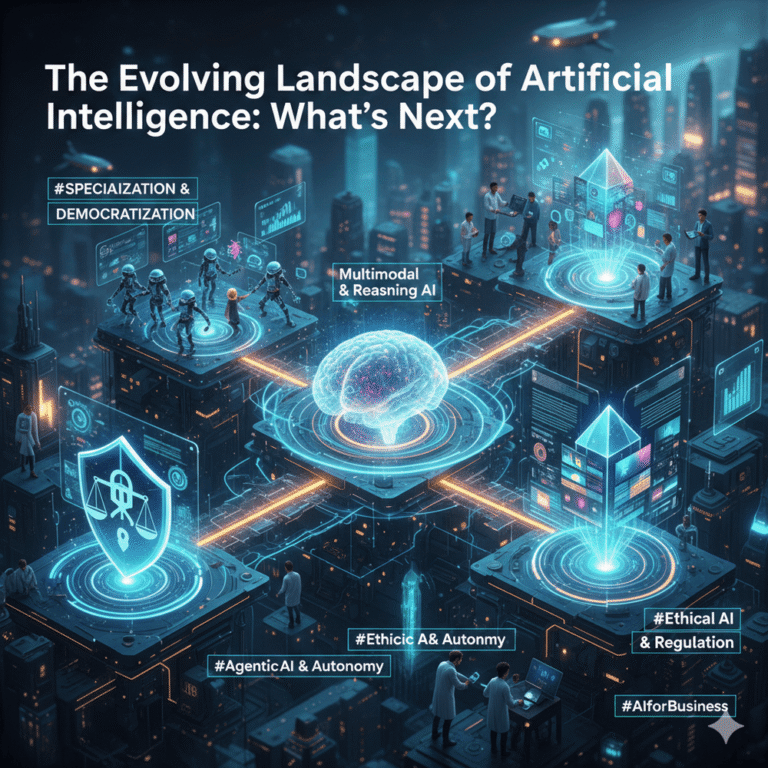
ArtificialIntelligence has moved from science-fiction dream to everyday reality at astonishing speed. Once limited to research labs and niche applications, AI is now woven into nearly every part of modern life—from predicting what we want to watch to detecting diseases earlier than ever before. As the technology continues to evolve, it raises new possibilities, new challenges, and new responsibilities for individuals and organizations.
AI as a Partner, Not a Replacement
One of the biggest misconceptions about AI is that it will replace humans entirely. In truth, the most powerful applications of AI emerge when humans and machines collaborate. AI excels at processing massive amounts of data, spotting patterns, and automating repetitive tasks. Humans bring context, creativity, empathy, and ethical reasoning—qualities machines can’t replicate.
The future belongs to hybrid intelligence: teams where humans handle the “why” and machines handle the “how.”
Everyday AI Is Becoming Invisible
AI used to feel like a futuristic add-on; now it’s quietly running behind the scenes. When your phone suggests the quickest route home, or when your email filters out spam, AI is working invisibly. This shift means that AI is no longer a technology we consciously use; it’s a layer that enhances how we interact with the world, often without us noticing.
As AI gets better at understanding language, images, and behavior, it will continue to dissolve into the background—quietly improving our experiences in subtle but powerful ways.
The Rise of Ethical and Responsible AI
With great capability comes great responsibility. As AI becomes more powerful, conversations about ethics have become more urgent. How do we prevent harmful biases in AI systems? Who is responsible when an algorithm makes a wrong decision? How can we ensure AI benefits everyone, not just a select few?
Responsible AI means transparency, fairness, accountability, and safety. Companies and governments are now developing frameworks to ensure that AI systems are trustworthy from the outset rather than being fixed after problems arise.
AI in Creativity and Innovation
AI is no longer limited to technicalfields. It’s collaborating with artists, writers, musicians, and designers to produce entirely new forms of creativity. Instead of replacing creators, AI is opening new doors—helping generate ideas, explore variations, and push creative boundaries.
We’re entering an era where creativity is amplified, not automated.
What the Future Holds
Looking ahead, AI will likely transform areas such as:
-
Healthcare: more accurate diagnostics and personalized treatments
-
Education: adaptivelearning experiences tailored to each student
-
Work: automation of routine tasks and the rise of new job roles
-
Climate science: faster modeling and better predictions
-
Accessibility: tools that break down communication and mobility barriers
AI’s potential is vast, but its impact depends on how we choose to shape it. If guided thoughtfully, AI can be one of the most empowering tools humanity has ever created.
#FutureofAI#GenerativeAI#AIinHealthcare#EthicalAI#AIEvolution#AgenticAI#VibesChanger#BuzzCreatorsDigitalMedia